Strategy shifts capital to buy stock: The levered treasury drag

The Levered Treasury Trap: Why Corporate Crypto's Biggest Buyer Just Halted Bitcoin Purchases
Corporate crypto's biggest buyer has stopped buying Bitcoin to bail out its own stock.

For the first time in two years, the market's most aggressive corporate balance sheet has gone dead silent on spot purchases. Instead of absorbing floating digital asset supply, capital is being redirected inward to defend a failing fixed-income architecture.
This transition marks a critical structural pivot in institutional market mechanics. The financialization of corporate treasuries has created a persistent appetite for fixed yield that now actively competes with spot asset accumulation for corporate liquidity.
🏛️ The Treasury Pivot: When Debt Servicing Replaces Spot Absorption
Preferred stock functions as a hybrid financial instrument that pays fixed dividends before common equity holders receive any distribution. When these securities trade at a significant discount to their liquidation value, issuing entities face a severe choice between asset expansion and capital structure maintenance.
Recent filings reveal that Strategy executed a $25 million buyback to retire 288,930 shares of its STRC preferred stock at an average price of $86.52. This marks the initial deployment of a broader $1 billion repurchase facility, leaving roughly $975 million in remaining capacity. The transaction occurred at a steep discount to the security's $100 stated target price, a threshold critical to enabling future capital raises.
"When balance sheet maintenance consumes the capital allocation process, the spot market loses its primary marginal buyer."
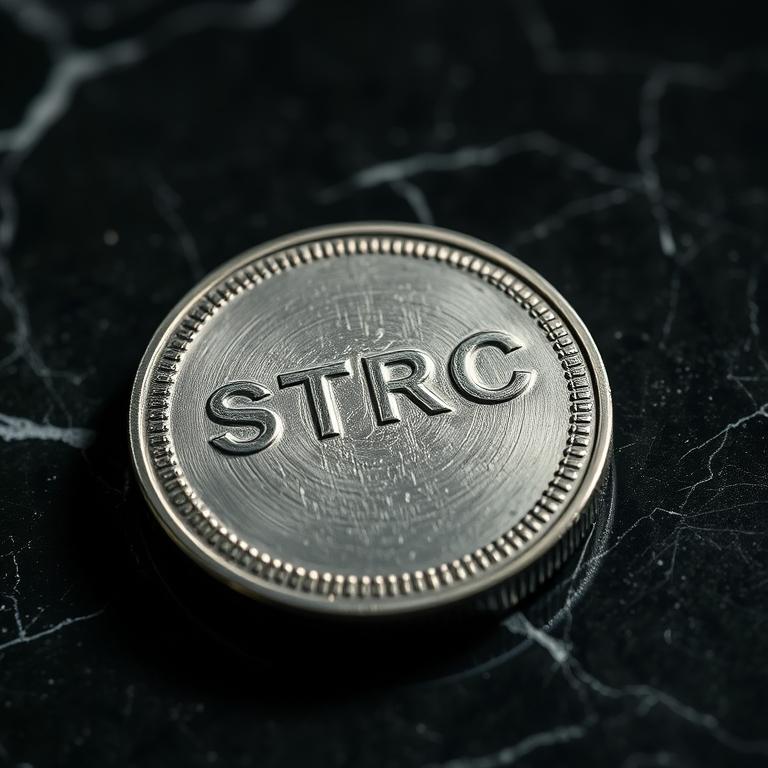
This capital shift coincides with a 5-week pause in spot asset accumulation, the longest deployment hiatus observed since 2024. While the treasury retains a massive position of 843,775 BTC acquired at an aggregate cost of $63.69 billion ($75,476 average per coin), the velocity of buy-side market impact has effectively dropped to zero.
To backstop recurring liabilities, management augmented its USD Reserve balance by $525 million, lifting total cash reserves to a record $3.75 billion. This reserve—funded by selling 5,429,160 Class A common shares for $544.5 million in net proceeds—provides roughly 25 months, or 2.1 years, of dividend coverage across a security complex yielding 12% annually, even as secondary prices dipped to $77 before stabilizing near $88.
📉 Structural Liquidity Strain: How Yield Engineering Absorbs Buy-Side Pressure
Connecting this balance sheet reallocation to market order flow reveals an uncomfortable reality for spot traders. The endless buy-side bid that defined previous market expansions was not funded by pure enterprise revenues, but rather by continuous capital market engineering.
When perpetual yield vehicles trade below par, the financial logic of the accumulation engine flips entirely on its head. Purchasing discounted corporate equity yields a higher immediate return on equity than buying additional underlying spot assets, effectively creating a structural drain on market liquidity.
"The financial machinery designed to leverage crypto exposure has transformed into a self-referential defense fund."
What begins as a corporate treasury expansion story ultimately becomes a liquidity conservation event. The necessity of maintaining a multi-billion-dollar liquidity buffer to service double-digit preferred yields creates an opportunity cost that directly starves the underlying asset of persistent spot demand.

📜 The 1974 Utility Preference Share Arbitrage
The pattern suggests a direct structural parallel to the public utility liquidity crises of the mid-1970s. During the 1974 energy supply shock, capital-intensive electric utility providers issued massive volumes of high-yield preferred stock to fund long-term physical infrastructure projects.
When secondary market yields surged and market prices for preferred equity fell significantly below par, utilities were blocked from issuing new shares to fund ongoing plant construction. Management teams were forced to halt capital expenditure programs and divert operational cash flows into buying back their own discounted preferred equity to prevent permanent capital structure degradation.
In my view, today's leveraged treasury model is running the exact same playbook. By prioritizing preferred share stabilization over spot asset purchases, corporate treasury operators are defending their lower-cost funding machinery at the direct expense of primary market asset absorption.
| Competing Force | The Irreconcilable Friction |
|---|---|
| Equity Dilution vs. Yield Defense | Diluting common stock to fund debt buffers rather than asset growth. |
| 🏛️ Par Value Target vs. Secondary Discount | ✨ Inability to issue new fixed-income instruments while existing shares trade below par. |
| Spot Price Support vs. Reserve Accumulation | 💰 Diverting net capital inflows into cash reserves instead of spot markets. |
🔮 The Capital Allocation Fork: Re-Expansion or Permanent Debt Maintenance?
Given this macro tension, secondary market order books are likely to feel the prolonged absence of systematic treasury buying. The capital engine that previously provided a price floor during market pullbacks is now structurally constrained by its own fixed-income obligations.
If preferred share discounts remain unaddressed, management will be forced to allocate future capital tranches into repurchase programs rather than market spot acquisition. The liquidity buffer, while providing more than two years of dividend runway, acts as trapped capital that cannot contribute to asset price growth.
"A balance sheet optimized for leverage servicing is a balance sheet neutralized for asset price expansion."

Investors must monitor whether secondary trading prices for corporate preference shares return toward target thresholds. Until preferred equity trades sustainably at par, expect the corporate bid for spot digital assets to remain secondary to internal capital preservation.
The transformation of corporate accumulation vehicles into yield-defense entities signifies a regime shift in market liquidity. Corporate treasuries will prioritize capital structure stability over spot asset appreciation during period of fixed-income discount.
As long as preference share yields trade at wide discounts to par, available liquidity will be directed inward. Market participants relying on continuous corporate buying must adjust expectations until financial restructuring concludes.
⚖️ Par Discount Arbitrage: The corporate process of buying back its own equity or debt securities at a price below their stated liquidation value to reduce long-term payout liabilities.
🛡️ Preferred Dividend Reserve: A dedicated cash buffer held by a corporate entity specifically earmarked to meet perpetual fixed-income dividend payments regardless of core asset performance.
🔄 Equity Dilution Recycling: The process of issuing common stock into public markets to raise cash for servicing higher-priority preferred yields or debt obligations.
- If corporate preferred equity trades below 90% of par → spot market asset absorption transitions to an extended pause regime.
- If USD dividend reserves drop below 18 months of coverage → risk of aggressive common stock dilution rises sharply.
- If preferred yield spreads exceed benchmark treasury yields by 800 bps → capital reallocation toward buybacks replaces asset growth.
— — coin24.news Editorial
This analysis is synthesized from aggregated market data and institutional research insights. It is provided for informational purposes only and should not be construed as financial advice. Cryptocurrency investments carry high risk; please conduct your own due diligence before making any investment decisions.
Related Intelligence

Bitcoin Whales Fight Seasonal Slump: Spot ETF Liquidity Illusion

BitMEX Lawsuit Demands 622 Bitcoin: A Harsh Liquidity Reckoning

Bitcoin rebound hides liquidity trap: crude shocks fuel an undertow

SpaceX Stock Drop Shrinks Musk Wealth: The Illusion of Paper Wealth

SK Hynix Crash Exposes AI Debt Traps: China CXMT Threatens Tech Moats