Solana Network Defies Ethereum Lead: The $19B Utility Pivot

The Ethereum Flippening of Utility: Why Solana's Volume Surge Redefines Layer-1 Value Accrual
Solana is winning the war for users while losing the battle for capital preservation.


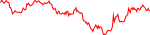
The market is punishing assets across the board, pushing Solana to retest its key $60 level. Yet beneath the price decay, the network is processing $19.0 billion in weekly perpetual swap volume and $10.2 billion in decentralized exchange aggregator volume.
📊 The High-Velocity Divergence of Layer-1 Economics
The current market environment presents a stark paradox. While the native token struggles at $65 after a severe retest of the $60 baseline, the underlying network is experiencing a significant surge in utility. Daily active returning users have reached a multi-month high of over 1.7 million, signaling deep behavioral retention rather than speculative churn.
This user density has translated into direct capital efficiency. Over the past week, Solana’s decentralized exchange aggregators captured $10.2 billion in volume, dwarfing Ethereum’s $4.8 billion by roughly 115%. More aggressively, Solana’s perpetual swap markets handled $19.0 billion, securing an 89% lead over Ethereum’s $10.1 billion. This massive divergence in throughput indicates that speculative and hedging activities are rapidly migrating away from the mainnet.
🔄 The Liquidity Migration: Why Volume Moves Faster Than Value
Given this macro tension, the technical execution metrics reveal a fundamental shift in how capital moves across decentralized ledgers. Perpetual contracts are financial instruments that allow traders to bet on asset prices without an expiration date, while aggregators automatically route trades across multiple venues to find the best possible pricing. What begins as a technology story about network throughput is ultimately a structural liquidity event.

The uncomfortable reading of this is that network security is no longer a guaranteed moat. For years, the primary bull case for the legacy smart contract leader relied on its ability to capture massive settlement fees. However, when execution speeds and transaction costs differ by orders of magnitude, active capital inevitably gravitates toward the path of least resistance.
"Execution speed is the ultimate form of liquidity distribution."
This high-frequency migration of capital suggests that transaction count is decoupling from asset price. While the native token's market valuation remains depressed alongside the broader market, the sheer velocity of capital moving through the ecosystem points to structural adoption. The market has yet to price this disconnect, still valuing protocols on static treasury assets rather than active economic throughput.
🏛️ The NASDAQ Electronic Disintermediation Mechanism
If this historical precedent of technology-driven migration holds true, the immediate impact on fee-heavy ecosystems will be highly disruptive. In the early nineteen-seventies, the establishment of the automated computerized quotation system structurally challenged the dominance of the legacy physical stock exchange. The incumbent exchange relied on physical specialists and high-friction, expensive manual execution, believing its institutional prestige and massive capitalization would preserve its monopoly.
The automated network did not initially match the deep institutional trust or regulatory backing of the legacy exchange. However, by dramatically reducing transaction friction and introducing high-velocity electronic execution, it eventually pulled the entire retail and tech-driven market share away from the trading floor. In my view, we are witnessing an identical structural shift today. The legacy smart-contract network is behaving like the physical trading floor, while the high-speed alternative acts as the electronic matching engine.

What the market is currently missing is that liquidity does not care about ideological purity or decentralization maximums when execution costs eat into margins. The incumbent's high gas fees act as a structural tax on economic activity. Once a high-velocity alternative proves it can sustain massive institutional volume without collapsing, the migration from legacy infrastructure becomes irreversible.
| Competing Force | The Irreconcilable Friction |
|---|---|
| Solana Network (Execution Velocity) | 📊 Sacrificing decentralization metrics to capture high-frequency retail transaction volume. |
| 🏛️ Ethereum L1 (Capital Security) | 🏛️ Tolerating high gas costs to secure complex smart contract settlements. |
| Aggregator Users (Fee Optimization) | Chasing low-friction execution while accepting higher smart-contract execution risks. |
🔮 The L1 Sovereign Fee Dilemma
Given this irreconcilable friction between cost and performance, the long-term viability of smart-contract networks will depend entirely on their economic design. The consensus belief that high transaction fees are necessary to secure a network is facing its greatest challenge. If a blockchain can support massive volumes without requiring exorbitant costs per transaction, the entire valuation model for Layer-1 assets must be rewritten.
We are likely entering a regime where token value is driven by velocity and utility rather than artificial scarcity. For investors, this means the historical relationship between network usage and token burns is breaking down. The future favors ecosystems that can act as a high-velocity execution engine, handling millions of transactions without creating a cost bottleneck for the end user.
"Value does not accrue to friction; it flows to the path of least resistance."
The structural trend suggests that the traditional metric of total value locked is becoming obsolete. Capital efficiency and contract interaction frequency will replace static assets as the primary drivers of protocol valuation. As high-frequency trading firms continue to migrate their operations to low-latency environments, legacy networks will face a sustained decline in active economic participation.

Consequently, we expect a widening divergence in asset performance. The high-throughput network will likely decouple from the broader altcoin market, establishing a new baseline of value supported by real execution demand rather than speculative narrative shifts. Investors must adjust their frameworks to prioritize transaction velocity over fee-burning mechanisms.
- If weekly aggregator volume share on the high-throughput network drops below the legacy network's level for several consecutive weeks → this triggers portfolio rebalancing.
- If active developer contributions to the low-latency ecosystem decline below critical baseline levels → the probability of network stagnation increases significantly.
- If the ratio of network transaction fees to total network security spend falls below sustainable margins → a systemic protocol risk-off regime is indicated.
⚖️ Perpetual Swaps (Perps): Derivative contracts that mimic spot trading but allow leverage without an expiration date.
⚖️ DEX Aggregator: A protocol that sources liquidity from various decentralized exchanges to provide traders with optimal transaction rates.
— Benjamin Graham
This analysis is synthesized from aggregated market data and institutional research insights. It is provided for informational purposes only and should not be construed as financial advice. Cryptocurrency investments carry high risk; please conduct your own due diligence before making any investment decisions.
Crypto Market Pulse
June 8, 2026, 18:42 UTC
Data from CoinGecko

