NEAR Protocol kills developer rebate: A Pivot From Builders To Buyers

The Death of Developer Rebates: Why Layer-1 Networks Are Cannibalizing Their Builders for Tokenomics
Blockchains are abandoning their builders to feed the deflationary desires of token holders.

This structural realignment represents a permanent shift in how smart contract networks value their developer class.
As protocols mature, the pressure to show capital efficiency outweighs early-stage ecosystem growth.
🛠️ The Great Realignment: Why Layer-1 Subsidies Are Dying in 2026
The upcoming implementation of nearcore v2.14 in August 2026 marks the official execution date for HSP-027, a proposal passed by the House of Stake governance body. By permanently removing the 30% developer gas rebate, the network is fundamentally shifting its economic mechanics away from developer welfare and toward native token deflation.
This structural realignment is a symptom of a broader competitive ecosystem restructuring sweeping across layer-1 blockchains. Historically, protocols treated transaction fees as a joint-venture pool to attract builders; today, they are forced to treat fee structures as scarce capital that must be optimized to preserve token value against aggressive inflation.

The pattern suggests that the era of the subsidized decentralized application (dApp) is ending. To attract sophisticated institutional liquidity in 2026, networks can no longer rely on vanity developer counts; they must demonstrate that transaction activity directly translates to native token scarcity.
"A protocol that must perpetually pay its builders to stay is a protocol without organic product-market fit."
🏦 The Pacific Railway Parallel: The Myth of Sovereign Subsidies
If this structural shift from supply inflation to capital optimization holds true, we must analyze the mechanism of protocol incentives through the lens of economic history. The current transition mirrors the wind-down of the United States federal railroad subsidies following the Pacific Railway Act of 1862.
During that era, the government aggressively subsidized rail corporations with massive land grants and financial rebates to force-multiply infrastructure deployment. However, by the 1870s, the state dismantled these artificial lifelines, forcing railroad operators to transition from construction-funded entities into self-sustaining transport networks dependent purely on consumer market demand.
In my view, this is exactly what is playing out across modern decentralized networks. We are witnessing the intentional removal of protocol-level training wheels. Blockchains that continue to subsidize basic execution costs run the risk of hosting ghost applications that generate artificial transaction volumes solely to recycle their own gas rebates.
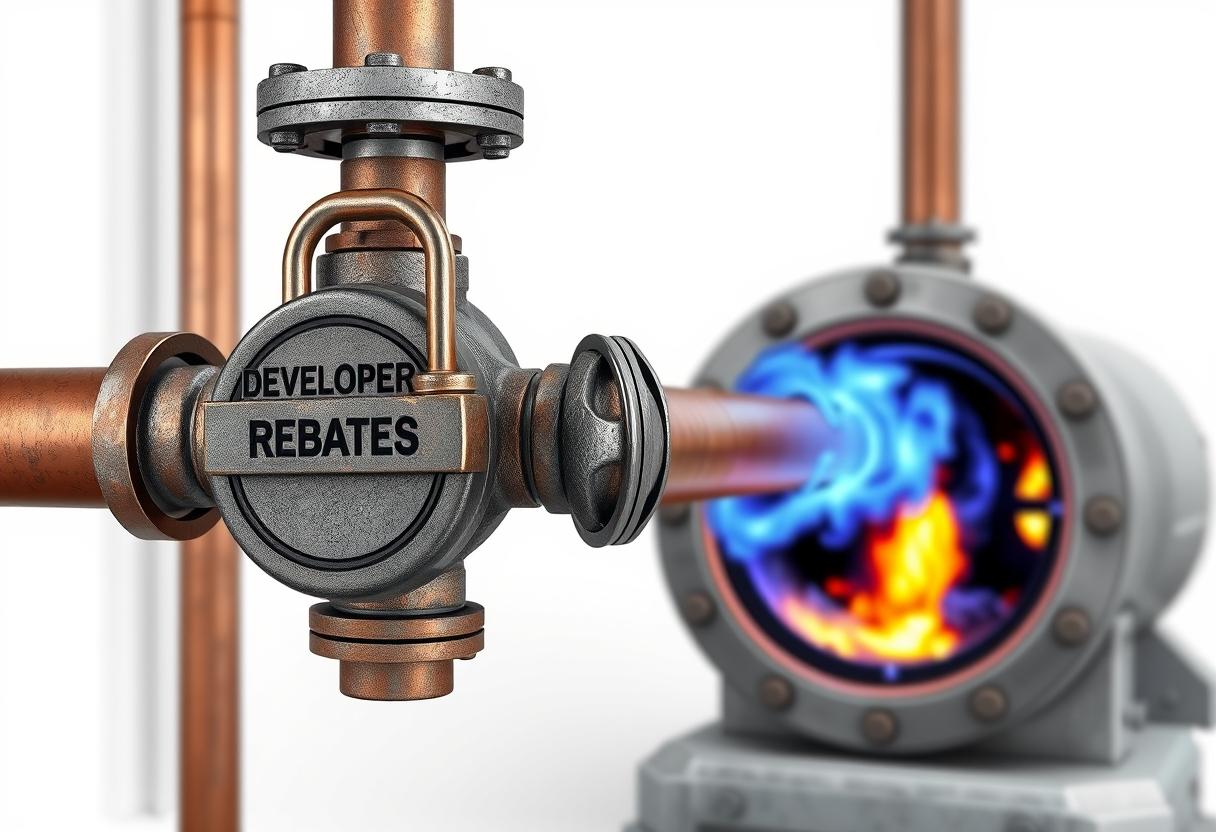
| Competing Force | The Irreconcilable Friction |
|---|---|
| Ecosystem Builders (Yield Seekers) | Sacrificing contract-level operating margins to fund macro-level token deflation. |
| Governance Stakers (Deflation Hawks) | Destroying micro-incentives for builders to boost short-term token-holder sentiment. |
📈 The Microstructure Shift: How Fee Burning Redefines L1 Valuations
With the friction matrix clearly defining the trade-off between builders and holders, the microeconomic impacts on market pricing become highly predictable. Redirecting the previously shared execution fees into a protocol-level burn directly alters the supply-elasticity of the native asset.
What this signals is a structural transition toward a direct value-accrual model. When transaction volume spikes, the deflationary mechanism accelerates exponentially, shifting the token from a utility-only medium to a yield-adjacent asset class. This change will likely spark a temporary rise in positive investor sentiment, masking the immediate risk of developer migration.
However, the uncomfortable reading of this is that it increases long-term volatility. By removing the financial cushion that the rebate provided to decentralized applications during market downturns, early-stage platforms will experience heightened cash-flow volatility, potentially leading to sudden project suspensions or migrations to remaining subsidized alternative chains.
"A cleaner burn narrative creates immediate speculative appeal, but it leaves dApp balance sheets exposed to raw market forces."
🔮 The Survival of the Fittest: Post-Subvention Protocol Ecosystems
While the immediate microstructure changes alter token economics, the long-term future of the smart-contract landscape depends on how builders adapt to this post-subsidy environment. Developers must now construct robust, self-reliant business models—utilizing direct user subscriptions, protocol-level fees, or alternative capital structures—rather than relying on blockchain welfare.

This is where it gets structural: we will likely witness a bifurcation of the Layer-1 market. Premium blockchains with deep, organic user demand will successfully implement full fee-burn economics, while struggling networks will be forced to keep their rebate models active to artificially prevent developer flight. This dynamic will make it remarkably clear which networks possess actual user-driven demand versus those running on subsidized smoke and mirrors.
For professional investors, this regulatory and economic shift provides a powerful screening tool. Assets that can eliminate developer handouts without experiencing a drop in active deployment addresses are the only networks structurally positioned to survive the ultimate transition to a mature, utility-driven market regime.
The decision to transition toward a pure burn mechanism is an aggressive bet on brand equity. By abandoning developer incentives, the protocol is assuming its current ecosystem footprint is sufficiently sticky to withstand the removal of economic training wheels. If application volume remains flat, the burn will fail to offset emissions, leaving the protocol with fewer builders and a still-inflationary asset.
We expect this pivot to trigger a consolidation wave, where capital-starved dApps migrate toward newer, aggressively subsidized alternative chains. Only top-tier dApps with established monetization frameworks will survive the transition, resulting in a cleaner, higher-quality, but narrower ecosystem footprint.
⚖️ Gas Rebate Program: A protocol-level mechanism that redirects a portion of transaction fees back to the developer of the smart contract that facilitated the transaction, serving as an operational subsidy.
🔥 Protocol-Level Burn: The permanent removal of native tokens from the circulating supply during transaction execution, designed to align network demand directly with token scarcity.
- If developer transaction volume drops more than twenty percent post-upgrade → this signals a structural deterioration in ecosystem stickiness.
- If competing L1s launch higher-percentage developer fee-shares → the risk of a developer talent migration toward subsidized rivals increases.
- If daily burn volume surpasses baseline inflation parameters → the protocol shifts into a sustainable, macro-driven supply-deflation regime.
This analysis is synthesized from aggregated market data and institutional research insights. It is provided for informational purposes only and should not be construed as financial advice. Cryptocurrency investments carry high risk; please conduct your own due diligence before making any investment decisions.
Related Intelligence

Ripple Laurels Mask Token Decoupling: Why corporate wins bypass XRP
XRP Whale Accumulation Hides Reality: Exchange outflows mask a fragile spot demand illusion beneath the surface.

Chainlink Shifts BUILD To Fee Model: A Bold Utility Realignment

Arbitrum Secures Critical Dev Moats: Code Outlasts Capital

Aave expands GHO yield to new chains: Fighting the stablecoin duopoly