Cardano Holders Face Macro Reset Risk: The $0.13 Threshold Nears

The Legacy L1 Extinction Curve: Why Cardano’s Key Support Test Signals a Structural Regime Shift
Peer-reviewed academic prestige cannot buy liquidity in a market that demands instant execution.

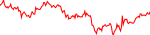
As Cardano (ADA) hovers precariously at its critical $0.13 support level, the broader market faces a sharp reminder that structural utility triumphs over historical sentiment. The protocol threatens a deeper cascade toward the $0.10 psychological floor, while any potential invalidation of this bearish momentum remains locked behind the heavy resistance at $0.17.

This technical fragility is not merely a chart anomaly; it reflects a broader, systemic migration of capital away from legacy layer-one blockchains that have failed to translate academic rigor into active ecosystem utility. This shift mirrors the 2001 Dot-Com Infrastructure Rationalization, when capital abandoned theoretical network capacity in favor of immediate, revenue-generating cash flow.
🧬 The Selective Survival of Productive Capital
The technical struggle surrounding the native asset of the prominent research-driven blockchain signals a profound shift in how market participants value protocol-level equity. For years, networks built on long-term, peer-reviewed academic frameworks commanded a significant premium based on the promise of future, robust decentralization. However, as the current market cycle favors immediate execution and capital efficiency, this theoretical value proposition is rapidly eroding under the pressure of newer, more agile networks.

What we are witnessing is the dismantling of the old layer-one hierarchy. Wealth is no longer distributed evenly across legacy assets during market rallies; instead, liquidity is highly concentrated in ecosystems that support active decentralized finance, real-world asset tokenization, and high transactional throughput. The struggle to hold key technical areas is a direct symptom of these shifting capital allocation patterns, where passive holding strategies are replaced by active yield-seeking behavior.
"When a network's chief export is its roadmaps rather than its utility, its valuation is built on borrowed time."
📉 Anatomy of a Telecom Capacity Glut
To understand the current structural decay of early-generation blockchain networks, we must look back to the aftermath of the turn-of-the-century technology bubble. During that era's telecom crash, massive telecommunications conglomerates laid millions of miles of fiber-optic cables based on optimistic future demand projections. When the speculative bubble burst, the market realized that raw, unused capacity without immediate commercial applications was virtually worthless, leading to a brutal consolidation where only companies with active consumer demand survived.
In my view, the current landscape for older smart-contract platforms is identical to that infrastructure overcapacity crisis. The pattern suggests that having a theoretically secure, academic-grade ledger is no longer enough to justify a multi-billion-dollar valuation if the block space remains largely empty. Strip away the speculative noise, and we see that investors are reassessing these assets not as technological marvels, but as underutilized pipelines facing a structural demand deficit.

| Competing Force | The Irreconcilable Friction |
|---|---|
| Research-First Purists (Scientific Scaling) | 🌍 Sacrificing immediate market adoption for multi-year academic validation protocols. |
| Liquidity Mercenaries (DeFi Yield Maximizers) | Abandoning passive holding architectures to chase high-frequency on-chain incentives. |
| Legacy L1 Custodians (Historical Valuation) | Defending psychological price floors while capital rotates into modular scaling networks. |
🌊 The Mechanics of the Capital Siphon
Given this structural macro tension, the market microstructure reveals that the vulnerability of older network assets is deeply tied to shifting liquidity routes. What we are observing is a selective siphon effect, where capital does not necessarily exit the entire digital asset space during downturns, but rather pools into highly liquid, systemic assets like the market leader. When the broader altcoin index faces momentum decay, the assets lacking active transaction volume suffer the most rapid order-book thinning.
The danger of breaking below multi-month support thresholds extends far beyond a single token's price action. It triggers a psychological cascade across the entire legacy layer-one cohort, raising hard questions about the long-term viability of networks that rely on historical name recognition rather than organic protocol revenue. As leverage is wiped out near these critical levels, the resulting liquidation wicks threaten to drag down adjacent older protocols, accelerating the transition to a liquidity bifurcation dominated by major assets and hyper-active speculative chains.
"In a mature crypto market, holding a token merely for its historical significance is a slow-motion capital write-down."
🔮 The Inevitable Bifurcation of Smart Contract Networks
If this selective capital siphon continues to play out, the future regulatory and technical landscape will likely bifurcate along utility lines. We are moving toward an era where blockchain networks will be judged strictly by their economic throughput, transactional revenue, and integration with institutional rails. Regulatory clarity and institutional-grade access will benefit platforms that facilitate real-world asset settlement, while leaving pure-play speculative or underutilized ledgers in a liquidity wasteland.

For investors, this structural shift presents both a clear risk of capital decay in legacy holdings and an opportunity to reposition into ecosystems designed for the modular age. The uncomfortable reading of this trend is that many of the top-ranking tokens of the previous cycle may never reclaim their previous market-cap dominance, acting instead as yield-dilutive weights on passive portfolios. Navigating this landscape requires a ruthless transition from narrative-based investing to metric-driven protocol analysis.
The current technical testing of long-held support structures is the market's way of executing a fundamental audit of protocol utility. Just as the overbuilt infrastructure of the early internet era eventually yielded to highly integrated software giants, the blockchain space is consolidating around protocols that capture genuine transactional volume. Legacy assets that fail to pivot from research-oriented roadmaps to active liquidity hubs face a permanent structural markdown.
Over the medium term, we expect a widening divergence where utility-driven networks capture the lion's share of institutional inflows, while older, passive ledgers suffer from chronic, low-volume decay. The ultimate winners of this cycle will not be those with the most academic citations, but those capable of hosting deep, frictionless capital markets.
⚖️ Capital Efficiency: The ratio of transactional volume or value secured on-chain relative to the total value locked or native asset market cap. High capital efficiency indicates active economic utilization of the network's block space.
⛓️ Corrective Channel: A technical chart pattern characterized by downward-sloping, parallel resistance and support lines, indicating a sustained period of sell-side dominance and capital outflow.
- If the native asset closes the week below the key support threshold → a transition toward a defensive capital-preservation regime is triggered.
- If active developer commits or on-chain transaction fees fall below the trailing quarterly average → structural ecosystem obsolescence is heavily implied.
- If the protocol's market capitalization decoupled from transactional utility exceeds historic standard deviations → an overvaluation risk regime is confirmed.
— — coin24.news Editorial
This analysis is synthesized from aggregated market data and institutional research insights. It is provided for informational purposes only and should not be construed as financial advice. Cryptocurrency investments carry high risk; please conduct your own due diligence before making any investment decisions.
Crypto Market Pulse
June 20, 2026, 17:22 UTC
Data from CoinGecko

