Alpaca Monopolizes Tokenized Stocks: The Facade of Onchain Autonomy

🏛️ The Tokenized Stock Illusion: How a Single Broker Monopolized Onchain Equities Ahead of DTCC’s October Pivot
Crypto promised to eliminate financial intermediaries, yet it built a billion-dollar equity market on a single centralized bottleneck.

While retail traders celebrate around-the-clock access to Apple and Nvidia shares across Solana and Ethereum, the underlying rails tell a radically different story. Behind the decentralized interfaces of Ondo, Dinari, and Kraken’s xStocks lies a solitary clearing house controlling nearly the entire supply chain.
With Alpaca securing roughly 94% market share across tokenized US stocks and holding over $1.5 billion in underlying shares, the industry faces an awkward paradox. As a fresh $435 million capital package accelerates Alpaca’s footprint ahead of DTCC’s commercial launch, onchain equity trading has become less about disintermediation and more about outsourcing systemic risk to a single private entity.
⚙️ The Invisible Monolith Powering Onchain Brokerages
In traditional finance, buying a share requires a licensed clearing broker to hold the underlying security and ensure settled cash matches issued stock. In crypto, tokenization protocols obscure this step through smart contracts, yet they remain bound to the exact same regulatory requirement.
When decentralized issuance platforms sought connectivity to US stock exchanges, established Wall Street brokerages overwhelmingly declined the compliance overhead. Alpaca filled that vacuum by building the custody, corporate action processing, short locates, and real-time minting infrastructure that powers platforms like Binance, Kraken, Ondo, and Dinari.
"The illusion of onchain autonomy dissolves the moment an asset must reconcile with a real-world clearing house."

This market capture was cemented in July 2026, when Alpaca finalized a $135 million equity round led by Peak XV, paired with debt facilities from Kraken’s parent company Payward and BMO. While public dashboards like RWA.xyz calculate tokenized equities at roughly $1.85 billion—up sharply from early-year benchmarks near $487 million—Alpaca’s self-clearing engine sits behind almost the entire active floating supply. Decentralization exists at the wallet layer, but structural control has consolidated into a singular corporate nexus.
⚖️ The Legal Illusion Behind Synthetic Token Exposure
Given this concentration of clearing mechanics, the fundamental nature of what onchain investors actually hold demands severe scrutiny. A sharp distinction exists between tokens backed directly by an issuing corporate entity and third-party synthetic tokens sold through off-exchange crypto applications.
Regulatory guidance issued by the SEC highlighted this precise structural fault line: third-party tokenized stocks rarely convey actual shareholder status. Buyers holding these digital wrappers do not receive direct voting rights or legal dividend entitlements from the target corporation. Instead, they hold an uncollateralized contractual claim against an offshore issuer, which in turn relies on its brokerage account at a central provider.
This fragility was exposed during the massive SpaceX pre-IPO tokenization campaign. Global retail buyers purchased over $1 billion in pre-market exposure across primary offshore exchanges—including more than $557 million processed through Binance alone via xStocks. When upstream share allocation failed at the primary dealer level, the campaigns were abruptly canceled and refunded on listing day.
"A tokenized share is only as sovereign as the broker willing to hold the equity in a bank vault."
The market is currently operating like a hyper-fast digital maglev train running on a single wooden rail switch. While execution occurs instantly on public blockchains, settlement gravity remains anchored to legacy infrastructure with multi-day transfer latencies and complex API dependencies.

📜 The 1973 Paperwork Crisis and the Centralization Trap
If the structural vulnerabilities of synthetic share promises seem alarming, financial history demonstrates that liquidity always flows toward central clearing when trading volume explodes. The current state of tokenized equities mirrors the operational panic that reshaped Wall Street over five decades ago.
During the 1973 Paperwork Crisis, physical stock certificate clearing collapsed under massive trading volumes, forcing US regulators and financial institutions to form the Depository Trust Company (DTC). Wall Street realized that decentralized bilateral clearing between hundreds of independent broker-dealers was mathematically unsustainable, opting instead to immobilize physical shares inside a single centralized trust depository.
What the market is witnessing today is the same structural feedback loop in reverse. Token protocols set out to eliminate intermediaries, but quickly realized that managing dividend distributions, stock splits, and proxy votes across global jurisdictions requires an immense centralized operational engine. In my view, protocols didn't choose a single clearing partner out of ideological betrayal—they chose it out of existential operational necessity.
| Competing Force | The Irreconcilable Friction |
|---|---|
| Offshore Synthetic Protocols vs. Retail Holders | 👨⚖️ Sacrificing genuine legal share ownership for uncollateralized contractual economic exposure. |
| Alpaca Monopolization vs. Onchain Protocols | Exchanging protocol autonomy for access to a single licensed execution hub. |
| DTCC Tokenization vs. Third-Party Issuers | 🏢 Imposing strict institutional KYC barriers that eliminate permissionless retail liquidity pools. |
🏛️ The October Institutional Pivot: TradFi Reclaims Settlement
Given this macro tension between centralized execution and decentralized distribution, the upcoming launch of official clearing infrastructure in October 2026 marks an existential inflection point for the entire asset class.
The Depository Trust and Clearing Corporation (DTCC)—which maintains global custody of more than $114 trillion in assets and processed $4.7 quadrillion in transactions in 2025—is launching its commercial Tokenization Service under a three-year SEC authorization framework. Following initial production testing involving over 30 tier-one institutions including BlackRock, Goldman Sachs, and JPMorgan, the service will directly issue tokens representing Russell 1000 equities, Treasuries, and major ETFs.
This institutional entry completely alters the market landscape. A token issued directly through DTC carries full legal ownership, governance rights, and direct dividend claims, backed by the primary depository of American capital markets. Institutional capital that previously avoided third-party synthetic wrappers will instantly gravitate toward official depository-issued assets.
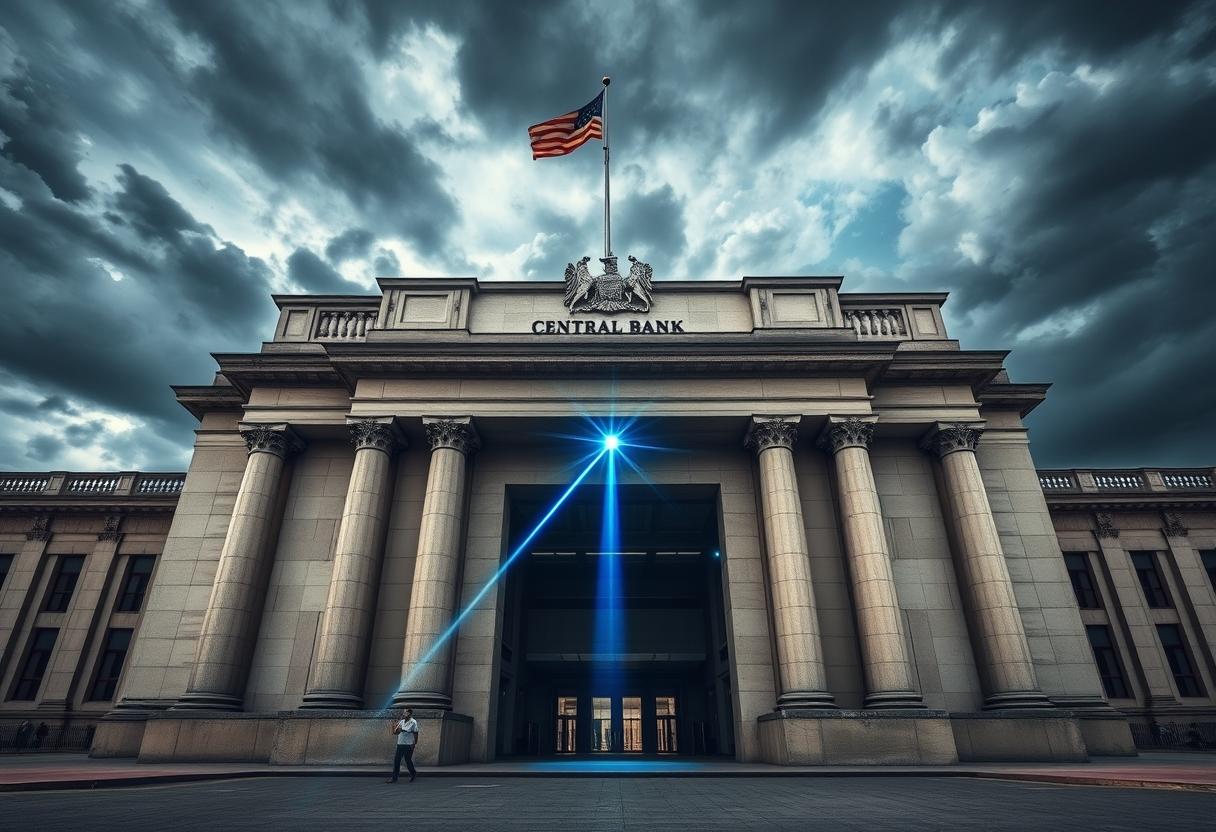
"October will force a permanent bifurcation: regulated legal equities on one side, synthetic shadow derivatives on the other."
While this structural shift threatens independent issuers, the dominant clearing provider has positioned itself directly inside the DTCC working group, actively powering pilot demonstrations for Ondo. The market is now dividing into two distinct operational regimes: institutional-grade tokens operating inside strict regulatory perimeter fences, and offshore synthetic products catering to permissionless retail liquidity.
The narrative that crypto will disintermediate traditional financial brokerages is officially dead. What we are witnessing instead is the complete absorption of onchain execution tech by incumbent clearing infrastructure. As traditional depositories launch commercial tokenization, third-party synthetic issuers will face severe margin compression.
Expect a permanent bifurcation by late 2026. Domestic institutional capital will flow exclusively through depository-backed assets carrying native shareholder rights, while third-party platforms will be forced to compete entirely as high-leverage, synthetic derivative venues for offshore retail markets.
⚖️ Third-Party Tokenization: A structure where an independent entity issues digital tokens representing economic exposure to an asset held in a private brokerage account, without conferring legal share ownership to the token holder.
🏛️ Self-Clearing Broker: A regulated broker-dealer licensed to maintain custody of securities, process clearing operations, and settle transactions directly with national depositories without relying on third-party clearing houses.
🏢 DTCC (Depository Trust & Clearing Corporation): The primary centralized financial infrastructure entity in the United States responsible for clearing, settling, and custoodying the vast majority of domestic securities trades.
- If third-party token holders experience contract claims disputes → this triggers a rapid migration toward official DTCC-issued tokens.
- If SEC enforcement targets non-issuer synthetic stocks → capital allocations shift defensively toward fully compliant institutional gateways.
- If clearing concentration exceeds single-broker solvency limits → risk premiums widen significantly across synthetic asset wrapper markets.
— — coin24.news Editorial
This analysis is synthesized from aggregated market data and institutional research insights. It is provided for informational purposes only and should not be construed as financial advice. Cryptocurrency investments carry high risk; please conduct your own due diligence before making any investment decisions.
Related Intelligence

Chainlink growth bypasses LINK token: The ultimate utility paradox.

Bitcoin miners reject network relief: 19B AI pivot drains hashrate

Wall Street silos drag Bitcoin yield: Unmasking the 25M clearing gap

Samsung Dictates Mobile Stablecoins: Corporate enclosure of open rails

Eurozone QT Starves Bitcoin Liquidity: The 52B Capital Vacuum